
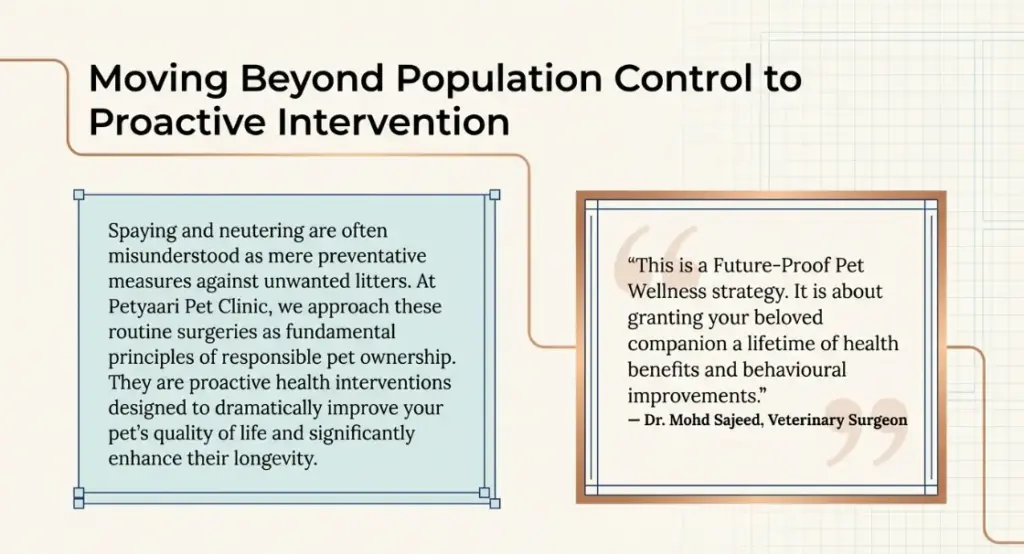
Namaste! I’m Dr Mohd Sajeed, a committed Veterinary Surgeon at Petyaari Pet Clinic, Hyderabad. Our mission is to ensure the health and happiness of your beloved companions. Today, I want to discuss an important choice for your pet’s health and for our community: spaying and neutering surgery. This routine surgical procedure is far more than preventing unwanted pregnancies. It’s a proactive health intervention, a Longevity Pathway Procedure that offers a lifetime of health benefits and behavioural improvements. It’s a fundamental principle of responsible pet ownership.
What exactly is spaying and neutering? Understanding Ovariohysterectomy and Orchiectomy.
Let’s start with the basics. Spaying and neutering are essential sterilisation procedures for pets. In simple terms, it involves a surgical procedure to remove an animal’s reproductive organs to prevent breeding. This surgical reproductive control is common in veterinary clinics and hospitals around the world. At Petyaari, it’s a routine surgical procedure we do each day.
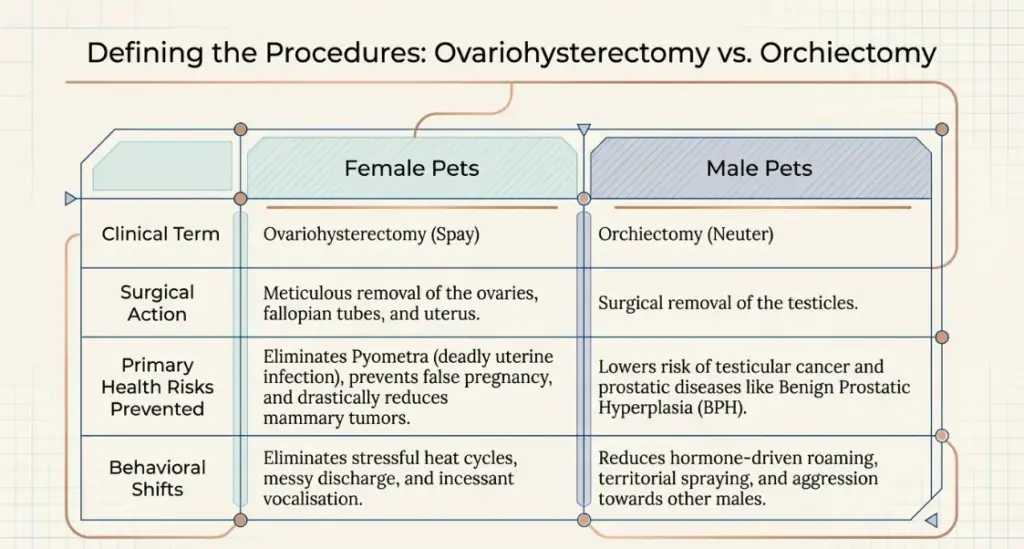
For female pets, veterinarians refer to the procedure as an ovariohysterectomy, which is known as spaying. During a spay surgery, our veterinary surgeons perform a meticulous removal of the ovaries, fallopian tubes, and uterus. This eliminates her ability to reproduce and reduces the risk of several serious health issues to a great extent. The benefits of spaying a female dog include prevention from pyometra, false pregnancy, and mammary tumours.
For male pets, veterinarians call the procedure an orchiectomy, or castration, which is more commonly referred to as neutering. This neuter procedure involves the surgical removal of the testicles. Like spaying, neutering prevents reproduction and offers many long-term health and behavioural benefits for your male companion. Both procedures are forms of gonadectomy for pets, intended to support ethical pet population control.
Why Spay or Neuter? Unlocking Profound Health Benefits for Your Beloved Pet
The advantages of pet sterilisation extend far beyond population control. It’s a Future-Proof Pet Wellness strategy that greatly improves your pet’s quality of life. We’re talking about lifetime health benefits that significantly enhance pet longevity.
A Shield Against Disease: Drastically Reducing the Risk of Cancers and Other Ailments
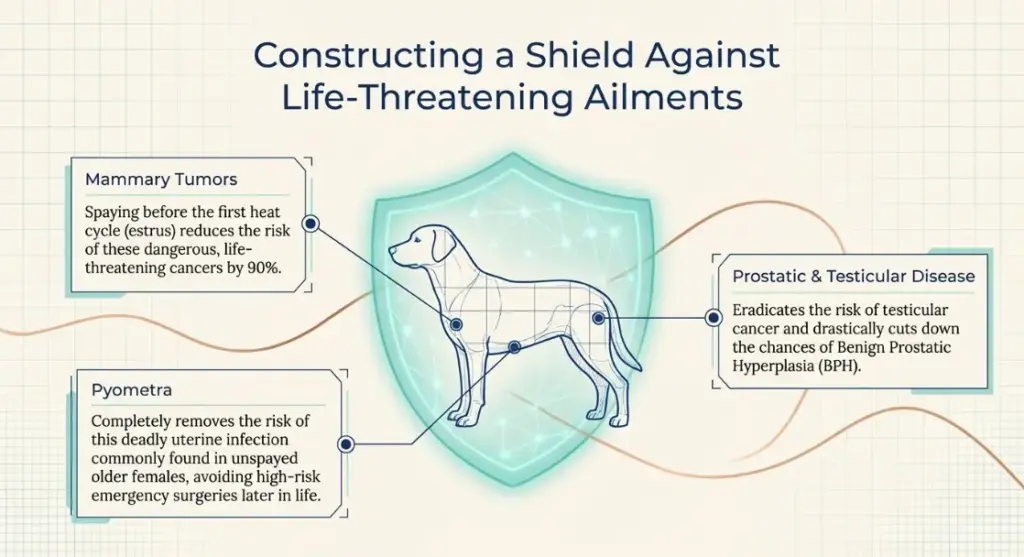
One of the most compelling reasons to spay or neuter your pet is the dramatic reduction in the risk of serious diseases. For females, spaying before their first heat cycle (estrus) can reduce the risk of cancers such as mammary tumours by 90%. Mammary tumours can be dangerous and life-threatening. That’s why this preventative cancer surgery is so important. Spaying also removes the risk of pyometra. This is a serious and often deadly uterine infection found in unspayed older females. This condition often needs emergency surgery. This type of surgery has a higher risk with anaesthesia and more recovery challenges than a routine spay.
Neutering male pets lowers the risk of testicular cancer. It also greatly cuts down the chances of prostatic diseases, like benign prostatic hyperplasia (BPH). These hormonal disease prevention measures ensure a healthier future for your pet. We often see these cases at our vet clinic in Hyderabad. We always recommend early sterilisation.
Beyond Health: How Spay/Neuter Resolves Behavioural Issues and Enhances Well-being
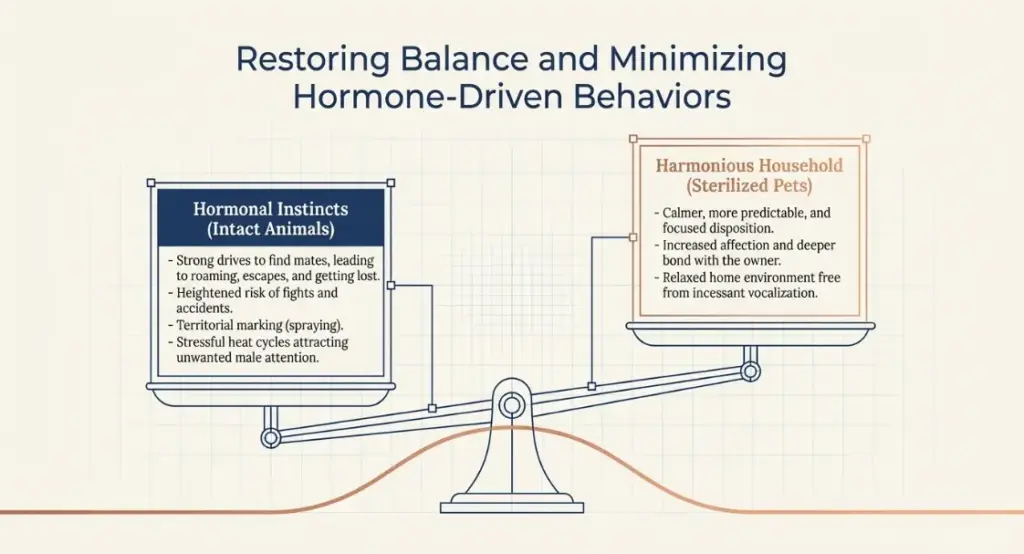
Beyond physical health benefits, spaying and neutering surgery offers significant behavioural benefits. Intact animals have strong hormonal instincts. Neutering can help males roam less since they won’t be as driven to find mates. This reduces the risk of accidents, fights, and getting lost. It can also lower aggression toward other males and reduce spraying (territorial marking). This results in a calmer and more predictable pet. These minimising hormone-driven behaviours improve their quality of life and your bond with them.
Female pets that are spayed no longer experience heat cycles, which can be stressful for both the pet and the owner. A female in heat can attract unwanted male attention, leading to escapes and potential aggression. Eliminating these cycles means no messy discharge, no incessant vocalisation, and a relaxed home environment. Behavioural changes after neutering are generally positive and contribute to a more harmonious household. It’s a key part of Proactive Pet Blueprinting for a balanced pet.
Championing Compassion: The Critical Role of Spay/Neuter in Preventing Pet Overpopulation
Every year, millions of unwanted animals face uncertain futures, a stark reminder of the consequences of uncontrolled breeding. Responsible pet population management isn’t a local issue; it’s a global concern.
The Alarming Reality of Pet Overpopulation in Hyderabad and Beyond
In Hyderabad, as in many large US cities such as Los Angeles and New York City, we face a serious issue of pet overpopulation. Pet overpopulation statistics reveal a heartbreaking truth. Far too many animals end up in animal shelters and rescues. This often results in stray animals, contributing to the spread of zoonotic diseases and posing risks to public safety. Reducing stray animal populations is a direct outcome of widespread spay-neuter initiatives.
The percentage of pets spayed/neutered is a key metric for assessing a community’s progress in addressing this crisis. Petyaari Pet Clinic offers spay and neuter surgeries at an affordable cost in the private sector.
The Spay and Neuter Surgical Procedure: What Happens at Petyaari Pet Clinic?
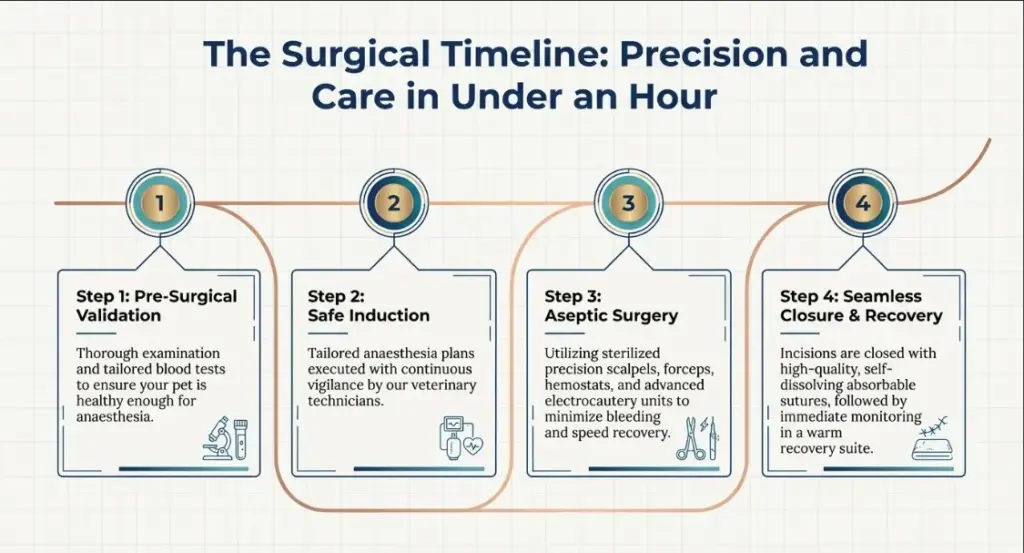
At Petyaari Pet Clinic, we know that spay and neuter surgery can be scary for you and your pet. Our team of veterinary surgeons and Vet Techs is dedicated to performing surgery safely. We follow strict AAHA Accreditation standards. This helps us create a sterile and stress-free environment. This is a safe surgical procedure when performed by experienced professionals.
Before any surgical procedure, we conduct a thorough pre-surgical examination, including blood tests, to ensure your pet is healthy enough for anaesthesia. We will discuss the anaesthesia and pain management protocols with you in detail.
A Closer Look: Anaesthesia, Surgical Instruments, and Pain Management Protocols
On the day of the procedure, your pet will be carefully monitored. We use state-of-the-art anaesthesia monitoring equipment. We prefer to use multi-model anaesthetics, as recommended by WVS They are known for their safety and for allowing quick recovery. Our veterinary anaesthesiology team ensures continuous vigilance.
Our veterinary surgical expertise is paramount. We follow strict aseptic techniques. This keeps the environment sterile and helps prevent infection. Our surgical instruments – precision scalpels, forceps, and hemostats – are sterilised. We sometimes use electrocautery units to improve safety and promote quicker recovery. This helps reduce bleeding. The procedure is quick and efficient. It usually takes under an hour for a simple case.
Pain management is a cornerstone of our philosophy. Before, during, and after surgery, we administer analgesics such as NSAIDs and opioids. This proactive approach ensures your pet’s comfort and aids in a smooth post-anaesthetic recovery. We perform targeted regional nerve blocks or enhanced pain control where appropriate. When closing the incision, we use high-quality sutures, often absorbable ones that dissolve on their own.
Navigating Recovery: Post-Operative Care, E-Collars, and a Smooth Recovery Time
After the spay-neuter surgery, your pet will recover in a warm, quiet space. Our veterinary technicians will keep a close watch. We’ll provide you with comprehensive post-operative care instructions. This postoperative care is crucial for a successful recovery period. You’ll get a post-operative care kit. It includes instructions on wound care, medication schedules, and activity restrictions.
Most importantly, your pet will likely need to wear an Elizabethan Collar (E-collar). This stops them from licking or chewing at their incision. This behaviour is the most common cause of surgery complications, although those rates are usually low. Recovery usually takes about 7-10 days. During this time, it’s important to limit activity. Please check the incision site every day. If you have any concerns, contact us. We schedule a follow-up appointment to ensure proper healing and address any remaining questions. We also provide a neutering certificate or spaying certificate for your records.
Your Burning Questions Answered: A Spay/Neuter FAQ Section
At Petyaari Pet Clinic, we often hear similar questions from pet parents considering spay and neuter surgery. Here are some common queries and our expert answers, formatted for clarity.
When is the best time to spay or neuter my pet?
For most dogs and cats, we recommend spaying or neutering between 5 to 6 months old. It’s best to do this before females have their first heat cycle. Always consult your veterinary surgeon when deciding whether to spay or neuter. Factors such as breed, size, and individual health can affect the optimal timing. We assess each pet’s ecological niche and growth plates.
What are the risks associated with anaesthesia?
No surgery is free of risk, but today’s veterinary medicine makes anaesthesia quite safe. At Petyaari Pet Clinic, we conduct pre-surgical blood tests and create tailored anaesthesia plans to reduce risks. Our veterinary anaesthesiology team is well-trained. We focus on keeping your pet safe during the procedure.
How much does spay-neuter surgery cost?
The average cost of spaying/neutering can vary based on your pet’s species, size, age, and any pre-existing conditions. We strive to make this essential sterilisation procedure accessible. Don’t hesitate to get in touch with Petyaari Pet Clinic for a personalised estimate. Emergency treatment for pyometra or cancer surgery usually costs much more than a preventive spay or neuter.
What should I expect after spaying or neutering surgery?
Your pet might be a little groggy or tired for the first 24-48 hours. We’ll provide post-operative care instructions covering wound care, medication, and activity restrictions. An Elizabethan collar (E-collar) is required to prevent licking the incision site. Most pets recover within 7-14 days. We prioritise post-operative pain management for pets to ensure comfort.
Are there any non-surgical sterilisation methods?
Yes, Suprelorin® (deslorelin) provides a non-surgical, reversible sterilisation method for pets. It is a temporary contraceptive implant which acts as a substitute for surgical neutering in male dogs and cats.
Will spaying and neutering surgery change my pet’s personality?
It’s a common spay-neuter myth that sterilisation negatively affects a pet’s personality. Neutering usually brings positive changes in behaviour. Pets become calmer, more focused, and less driven by hormones. They often show more affection and are less likely to act out. This includes behaviours such as roaming, aggression, and spraying.
Accessing Care: Low-Cost Spay/Neuter Programs
Spaying and neutering surgery should be accessible to all pet owners. Financial constraints should not be a barrier to responsible pet ownership. Here in Hyderabad, Petyaari provides cat neutering and spaying for Rs 5500 and Rs 6500, respectively.
In conclusion, spaying and neutering your pet is one of the best choices for their health and happiness. It also benefits our whole community. Proactive Pet Blueprinting helps your pet live a healthier, happier life. It also helps tackle the issue of pet overpopulation. We at Petyaari Pet Clinic are here to guide you through every step of this journey and provide expert veterinary surgical care. Don’t hesitate to reach out to us in Hyderabad to discuss your pet’s unique needs and schedule a consultation. Together, we can ensure Future-Proof Pet Wellness for all.
Customer Reviews
I recently took my cat for a neutering procedure, and I am extremely satisfied with the care provided by the Dr. Sajid Sir veterinary doctor. From the beginning, the doctor was very professional, patient, and compassionate. Doc clearly explained the entire procedure, including the benefits, risks, and post-operative care, which helped ease my concerns. The surgery was performed smoothly, and my cat was handled with great care and gentleness. The clinic maintained a clean and hygienic environment, which gave me confidence in their services. After the procedure, the doctor provided detailed instructions for recovery, including medication, diet, and how to manage my cat’s activity. The doctor was available to answer my questions and ensured that my cat was healing properly. Thanks to their expertise, my cat recovered quickly without any complications. I highly recommend this veterinary doctor to anyone looking for safe and reliable care for their pets, especially for procedures like neutering. Their professionalism and genuine concern for animals truly stand out And please Start a new branch Near our Area so that it will be helpful to Many Pet owners . Thank Doctor( Mohd Sajeed Sir )
Great experience at Pet Yaari Clinic. Dr. Sajeed performed my cat’s surgery and handled everything very professionally. He explained the procedure clearly and guided well through the recovery process. Highly recommend this clinic for anyone looking for a trustworthy vet.
I recently took my dog for spaying, and I’m extremely happy with the care and support provided by the doctor and the entire team. From the very first consultation, the doctor was patient, knowledgeable, and reassuring. He explained the entire procedure clearly and addressed all my concerns, which made me feel confident and at ease. The surgery was handled with great care, and my dog recovered smoothly without any complications. What I truly appreciate is the doctor’s friendly and approachable nature—he followed up regularly and guided us on post-surgery care in detail. His support and genuine concern for my pet’s well-being made a huge difference. I highly recommend this clinic to anyone looking for a caring and professional vet. Thank you for taking such good care of my dog!
