
Diagnosis and root-cause check
The vet confirms the haematoma and examines the ear canal for otitis externa, yeast, bacteria, mites, allergies or foreign bodies.
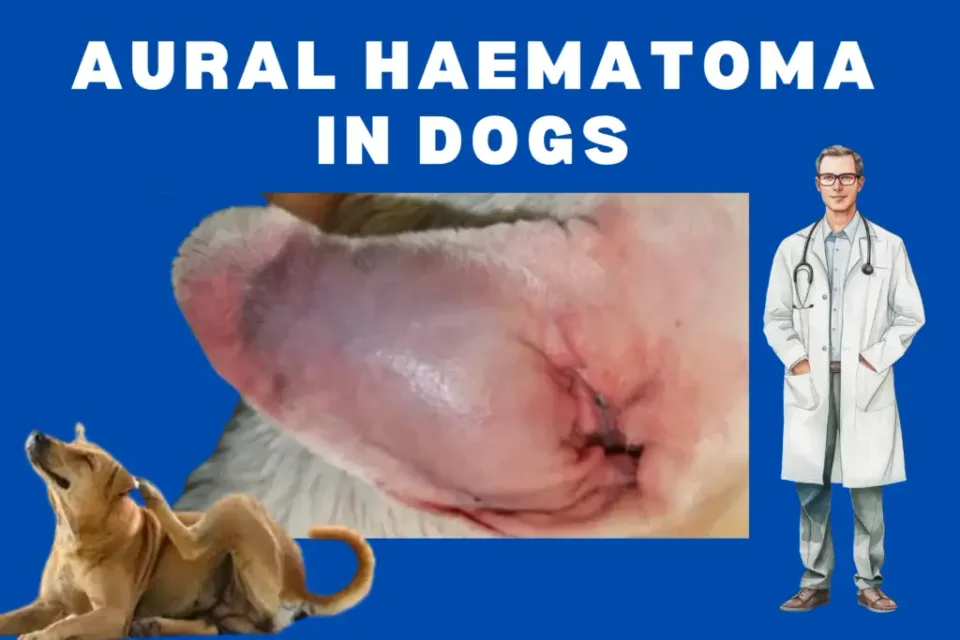
Learn swollen ear-flap signs, causes, diagnosis, aural haematoma surgery, bandage care and recovery guidance at PetYaari Hyderabad.
Aural haematoma surgery
Aural haematoma in dogs often starts with ear irritation, infection, allergy or repeated head shaking. This PetYaari guide explains when surgery may be needed, how the ear flap is treated, why the underlying cause matters and what recovery care looks like.
Swollen ear flap assessment
Ear infection and allergy checks
Surgery, bandage care and recovery guidance
Helpful links
PetYaari can check the swollen ear flap, look for underlying ear infection or allergy triggers, discuss diagnostics and guide whether drainage, bandage care or surgery is needed.
Procedure
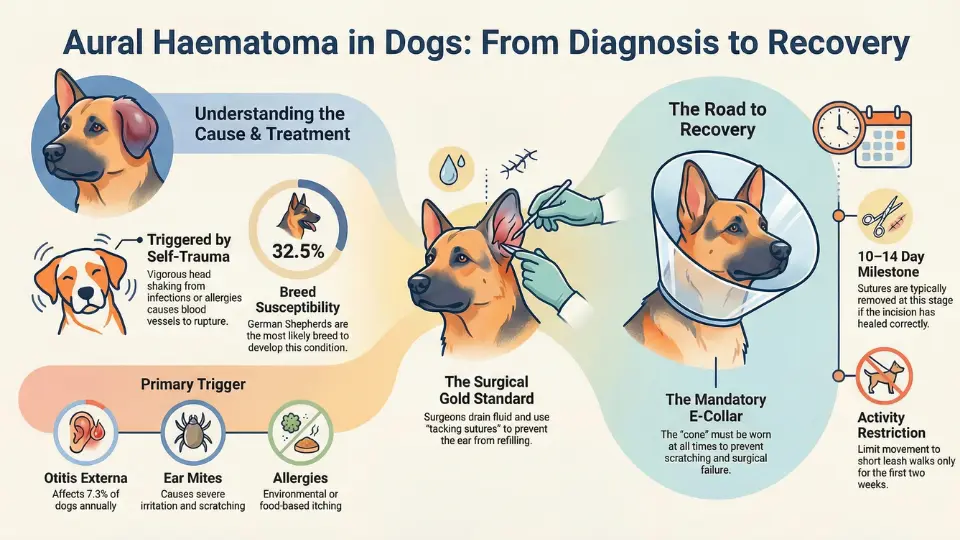
Surgery is often recommended for moderate to large aural haematomas because it drains the blood, removes clots and closes the pocket between skin and cartilage so it does not refill.
Surgery estimates vary by swelling size, ear infection status, anaesthesia needs, bandage care and follow-up plan. Confirm the current estimate with PetYaari before booking.
The vet confirms the haematoma and examines the ear canal for otitis externa, yeast, bacteria, mites, allergies or foreign bodies.
Your dog is placed under general anaesthesia, and the ear flap is clipped, cleaned and prepared for sterile surgery.
The surgeon makes an incision, drains blood and clots, flushes the pocket and places multiple sutures to tack skin back to cartilage.
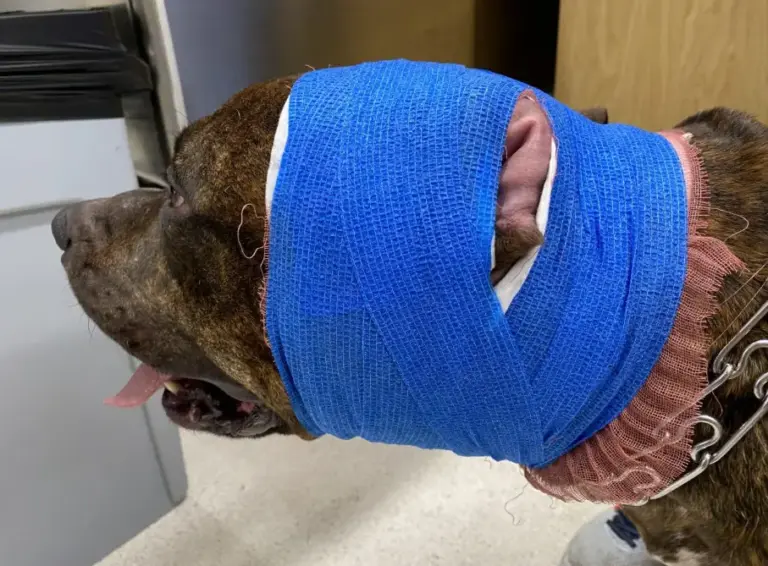
A head bandage protects the ear and reduces head shaking. Follow-up visits check drainage, healing and timing for suture removal.
Helpful guide
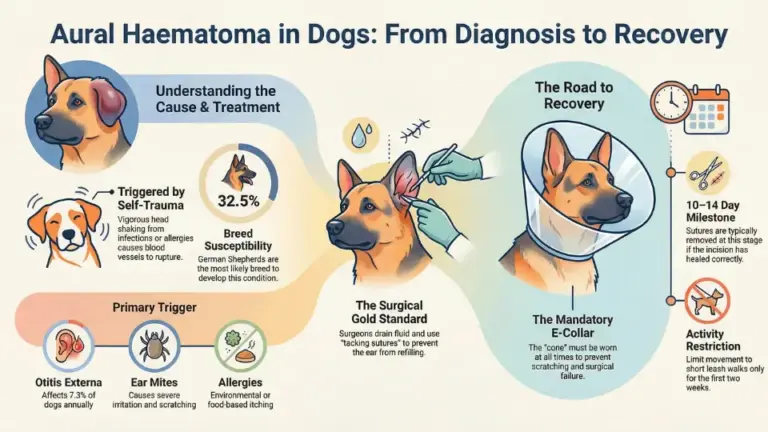
This infographic gives pet parents a quick visual overview of aural haematoma surgery before they discuss the case with the veterinarian.
Surgery planning
A swollen, warm, fluid-filled ear flap should be checked by a veterinarian. Call or WhatsApp PetYaari before visiting so the clinic can confirm doctor availability, assess urgency and guide whether your dog needs ear cytology, drainage or surgery.
Before surgery
Recovery care
Ear surgery guide
What causes it?
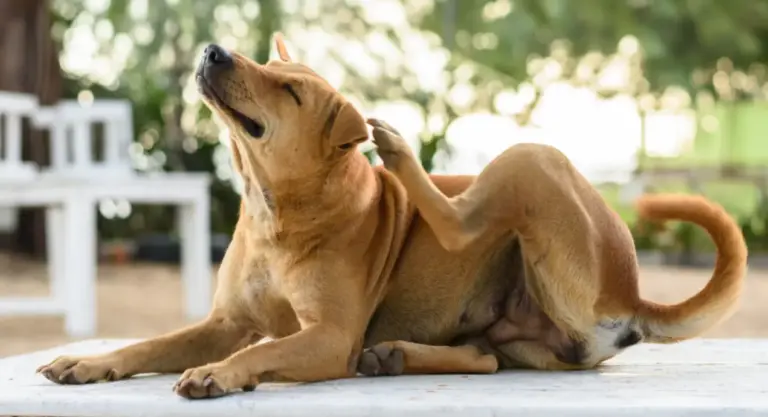
Otitis externa, yeast or bacterial infection can trigger itching, scratching and violent head shaking that ruptures small ear vessels.
What causes it?
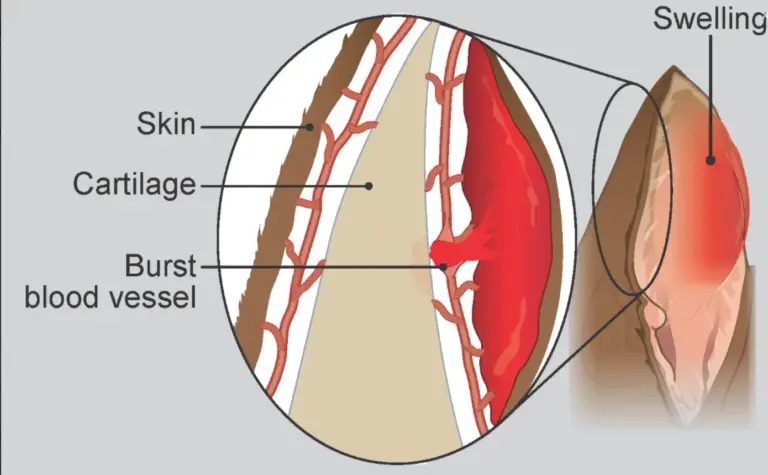
Aural haematoma forms when blood collects between the ear cartilage and skin, creating a cushion-like swelling.
What causes it?
Environmental allergies, food allergies, ear mites or grass seeds can keep the ear irritated until the root cause is treated.
What causes it?
Untreated haematomas can scar and distort the ear flap, so early veterinary care improves comfort and cosmetic outcome.
Treatment choices
Surgery drains blood, removes clots and uses sutures to close the pocket so the ear flap can heal flat.
Treatment choices
Needle drainage may give short-term relief, but recurrence is common because the empty pocket is not closed.
Treatment choices
Some non-surgical approaches may be used in selected cases, but often need repeat visits and careful home management.
Treatment choices
Ear infection, allergy or parasites must be managed, otherwise head shaking can continue and the haematoma may return.
Recovery care
Watch for slipping, tightness, swelling or fluid soaking through. Some bandages need clinic changes.
Recovery care
The collar prevents scratching, chewing, suture damage and infection. It should stay on unless the vet advises otherwise.
Recovery care
Pain medicine and antibiotics should be given exactly as prescribed, and the full course should be completed.
Recovery care
Dogs are often groggy for 24 to 48 hours. Drains may be removed around days 3 to 7, and sutures often around days 10 to 14.
When to call PetYaari
A soft, warm or painful swelling on the ear flap should be checked before it becomes larger or scars.
When to call PetYaari
Repeated head shaking, rubbing or scratching usually means the underlying ear problem needs treatment.
When to call PetYaari
Foul smell, brown/yellow discharge, redness or pain can suggest infection and should not be managed only at home.
When to call PetYaari
Call if the bandage slips, your dog removes the collar, the ear bleeds, swelling returns or your dog stops eating.
Reviews
Excellent
Google Rating
Based on 624 reviews
Reviewed Mar 2026
BN Reddy Nagar
Great experience at Pet Yaari Clinic. Dr. Sajeed performed my cat’s surgery and handled everything very professionally. He explained the procedure clearly and guided well through the recovery process. Highly recommend this clinic for anyone looking for a trustworthy vet.
Reviewed May 2026
Kharmanghat
They provided proper medication for pet jack,as our pet suffered from tick fever and now he is doing fine and healthy.best recommend clinic.
Reviewed May 2026
Vanasthalipuram
Excellent service for my Sheru by petyaari staff, Recommend clinic for our loved pets.
Reviewed Mar 2026
BN Reddy Nagar
Dr Sajid is very friendly and very professional and helped my German shepherd in maintaining its health ..definitely advise consultation
Reviewed May 2026
Kharmanghat
Best clinic for pets health and grooming services.
Reviewed May 2026
Vanasthalipuram
Excellent service. Highly recommended!
Reviewed Feb 2026
BN Reddy Nagar
Very patient and knowledgeable. Helped a lot in our pet turtles recover
Reviewed May 2026
Kharmanghat
Dr Sankeerthi provides us with valuable knowledge about diet and health for our loved paws.
FAQs
An aural haematoma is a blood-filled swelling in the ear flap, often caused by head shaking or scratching from infection, allergy, mites or irritation.
Moderate to large haematomas often need surgery to drain blood, remove clots and close the pocket so the ear flap does not refill.
Yes, especially if the underlying ear infection, allergy, mites or irritation are not treated.
Recovery often includes bandage care, Elizabeth collar use, medicines, activity restriction and follow-up visits for drain or suture checks.
Call if your dog has sudden ear swelling, repeated head shaking, ear smell, discharge, redness, pain, bleeding, bandage problems or appetite loss.
Related care
Consultations, treatment plans and routine care.
Explore veterinary servicesCore puppy, kitten, dog and cat vaccines.
View vaccination servicesBath, blow dry, trimming, nail clipping, ear cleaning and coat care.
View grooming servicesBlood tests, skin checks, tick fever screening and report review.
View diagnostic servicesClinics
Vivekananda Park Road, near Muthoot Finance, NGO Colony, Vanasthalipuram, Hyderabad, Telangana 500070
View clinicH 8-147, near Gayathri Nagar, Kharmanghat, Jillelaguda, near HDFC Bank and Union Bank, Meerpet, Hyderabad, Telangana 500079
View clinicRoad No 6, Chaitanya Nagar, Phase 2, B N Reddy Nagar, Hyderabad, Telangana 500079
View clinicPetYaari care team
Message PetYaari to confirm the right service, nearest branch and available appointment slot.